I’m writing a travel diary. Join me to my trip to Kerala 🙂
It was 23 August 2017. At 5 AM my family and I boarded the aircraft. My head kept turning to the window seat occupied by my sister. I had wanted that seat, but according to the boarding pass, it had been allotted to Rida. She’d claimed it, calling it rightfully hers and I couldn’t argue.
I sighed. I thought I’d missed a wonderful opportunity to watch Kerala in all its beauty while the aircraft landed in Cochin.
A few minutes later, the seatbelt sign popped up on the signboard. I fastened it, ready to be flown to the place whose people proudly called it “God’s own country”. But the aircraft wasn’t flying just yet. I looked at the window, sighed again and looked around me too.
On my right, father struggled to make way for a man who kept wanting to use the lavatory. My mother looked calm. On my left, my sister was excited. In an act of boredom, I looked at the seats behind me too.
But there were no people to judge and no faces to access. The entire row was empty! I moved there, seating myself near the window. Flight 6E 261 from Hyderabad to Cochin was going to be the most calm and scenic flight I had ever boarded.
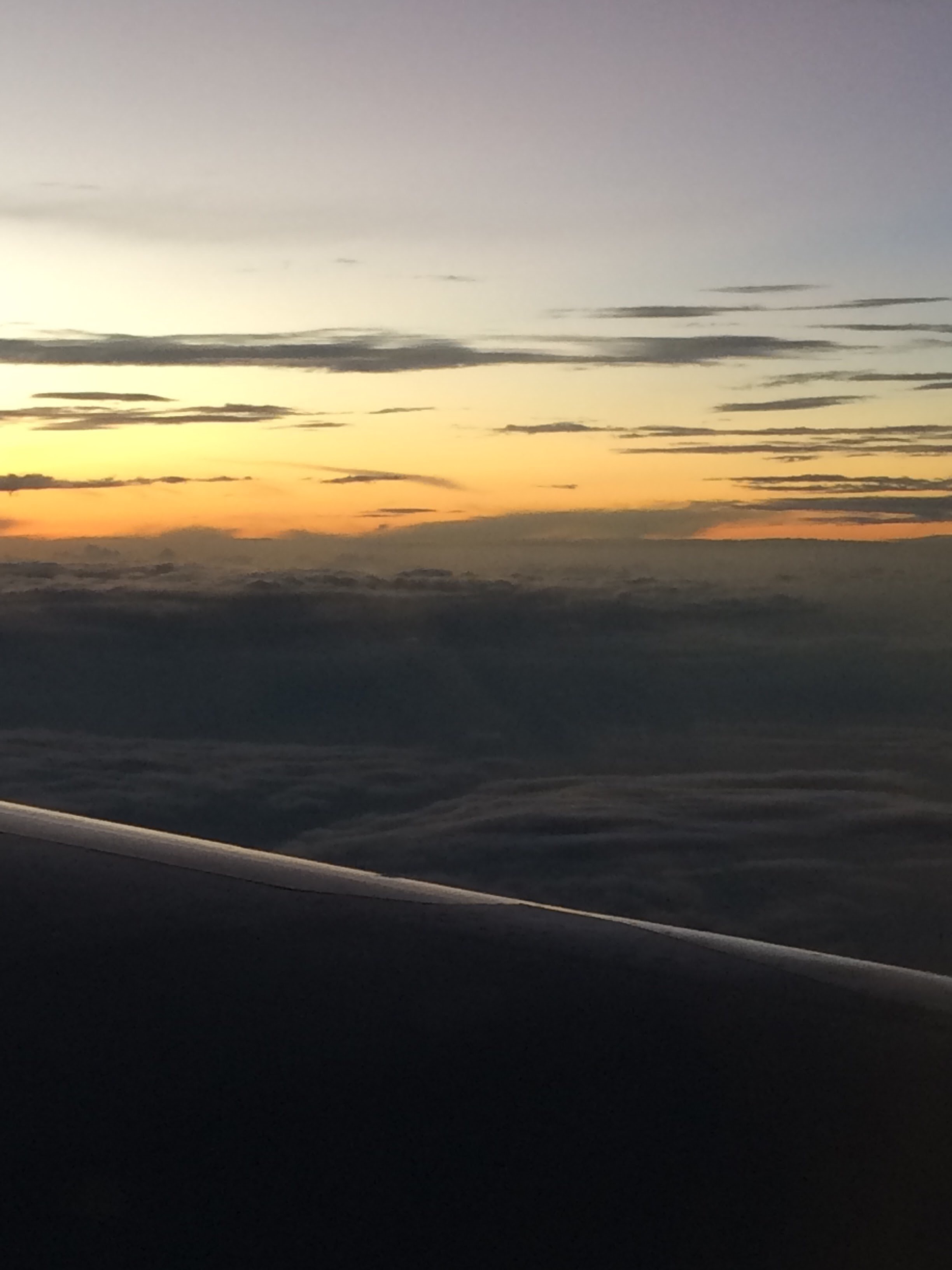
As the plane began its descent, I watched the thick blanket of clouds become thinner and thinner, until I could see them no more. Instead, I saw brightly coloured houses. Ah, what a wonder it is to view human civilisation from above!
The things we built, buildings, houses, malls, and everything else look like tiny hives built for creatures smaller than a bee. And the cars, like anxious ants bustling about, looking for their life’s purpose.
The only time humans realise how small they are, when they look at things from a far bigger perspective.
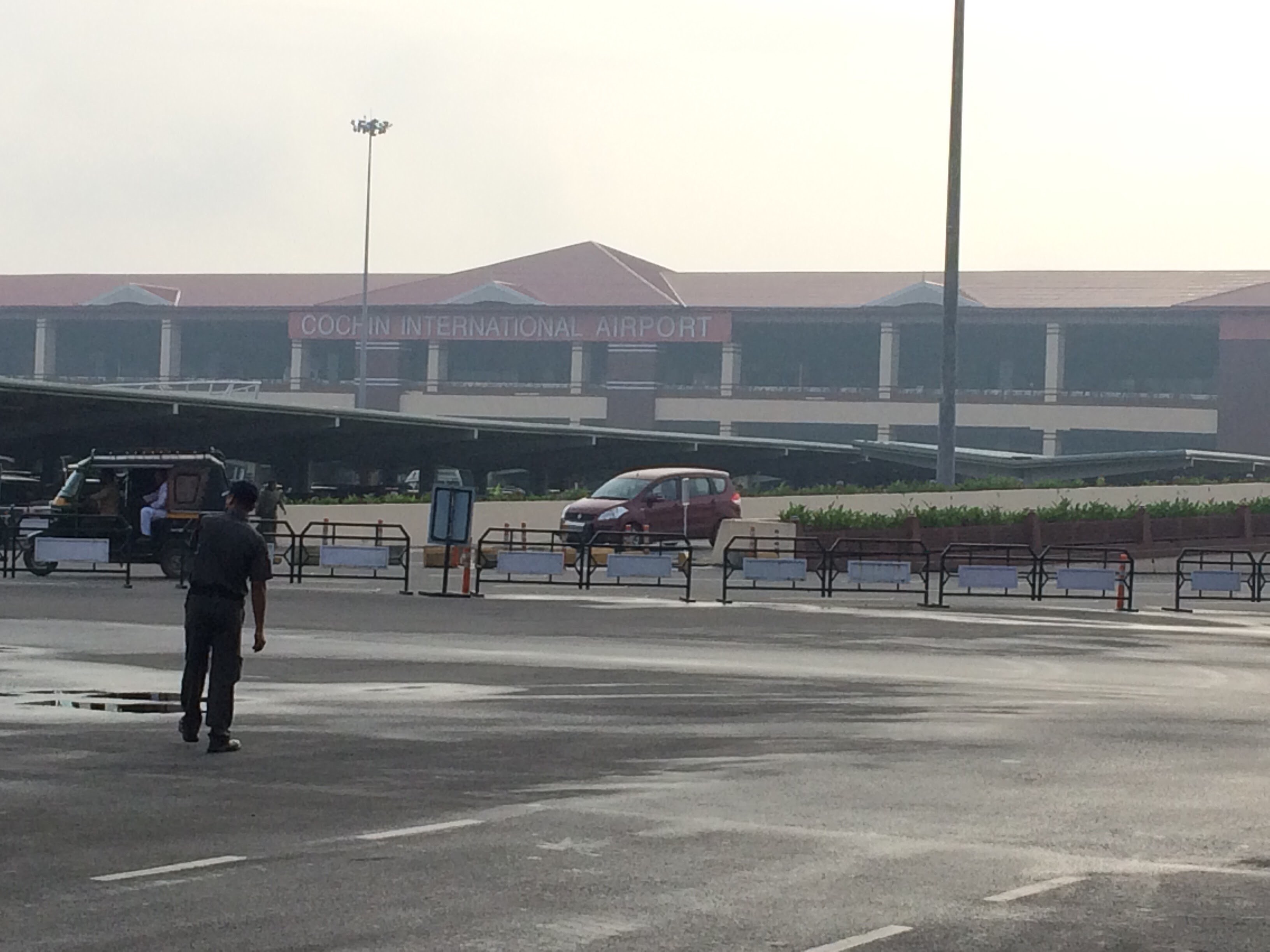
But human civilisation didn’t seem to crowd Cochin. It mingled, and on occasion, left alone the natural flora of the region. I saw a river flowing. It flowed from big and small hills through canals and finally through the rows of houses.
Trees, shrubs, and little plants grew on their own; nobody seemed to have planted them. Nobody mowed them down or cut them. The flora happy to be there, and the people proud of their existence.
A driver picked us up from the airport and drove us to a place where we could have some tea.
Then we proceeded to a small restaurant for breakfast. Some vadas and two masala dosas later, we were on our way to Athirapally in a Toyota Innova.
.
.
.
Athirapally is famous for its waterfalls. Sure, there’re several waterfalls all over the hilly areas in Kerala, but this particular region boasts of some of the most magnificent ones. Throughout our road trip, I saw many awe-inspiring falls.
But the one that beat them all and took my breath away was the one at Vazhachal Waterfalls in Pariyaram. The water from the river Chalakkudy goes through these hills to form the Vazhachal falls.
On our way inside the park, a large group of monkeys awaited our arrival. Not to welcome us though. They just expected some tasty treats from tourists, who were more than happy to feed them…ahem…chips. Yes, I saw a monkey happily gorge on a packet of Lay’s chilli flavoured chips.
Ah, humanity’s favourite unhealthy, fattening, and sickening snack has now reached the poor monkeys. It won’t be long until we have unusually obese monkeys that we’re going to put on diets and regularly check for diabetes.
We dodged the monkeys to get to the waterfall. I had never seen any place so beautiful. I mean, I did, but it wasn’t naturally beautiful. The Shaikhs of the UAE had turned a desert into a garden – something that the ancient people would’ve called a miracle.
In Shimla and its surrounding areas, I had witnessed waterfalls too. But that was in July, when it barely snowed or rained—those waterfalls could only qualify to be called as streams.
This is a fall so big, it’s river could be used to generate hydro electricity for Athirapally. Despite the Kerala government’s best efforts to do so, the Athirapally hydro project remains rather controversial. And with good reason.
The natives and green activist argue that building dams and other power plants would destroy the wildlife and flora of the region. It would also affect the livelihood of the tribals who are dependent on the river.
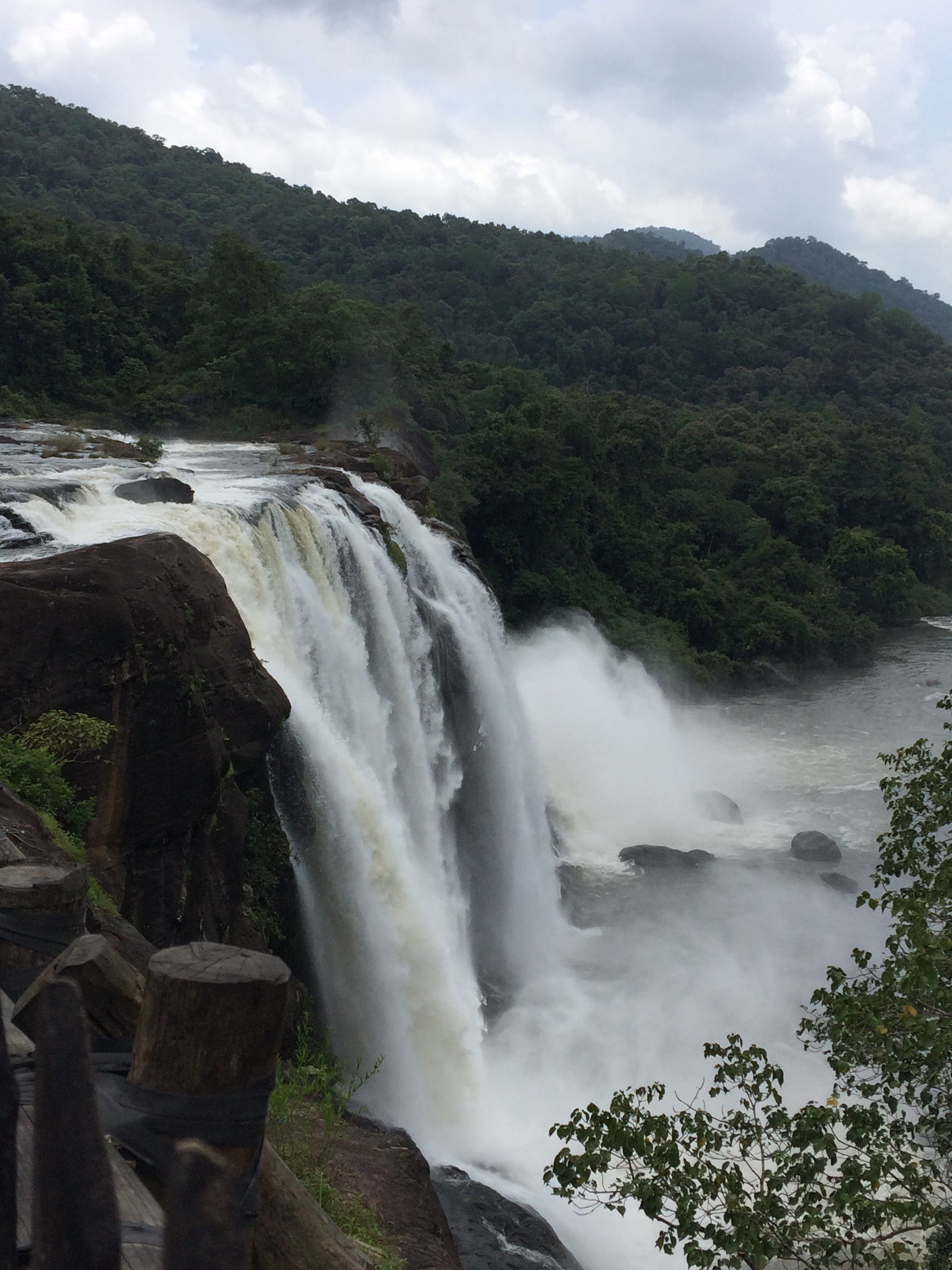
This view however, wasn’t enough for me. I could see the river cascade through small rocks, and finally fall from a steep incline, but to my right. I couldn’t see it all, however. I wanted to see the waterfall in all its glory, to be up close with it; have a full frontal view and get personal with it.
To do that, one had to descend to a lower ground. Perfect, I thought, and proceeded downhill with my sister and, my mother, who was apprehensive about the whole plan.
When I started to descend though, some profane words may have slipped through my mouth. It was too steep. And it was never-ending. I was getting exasperated. 20 minutes later, through a narrow, rocky, and an uneven path, we had reached the spot.
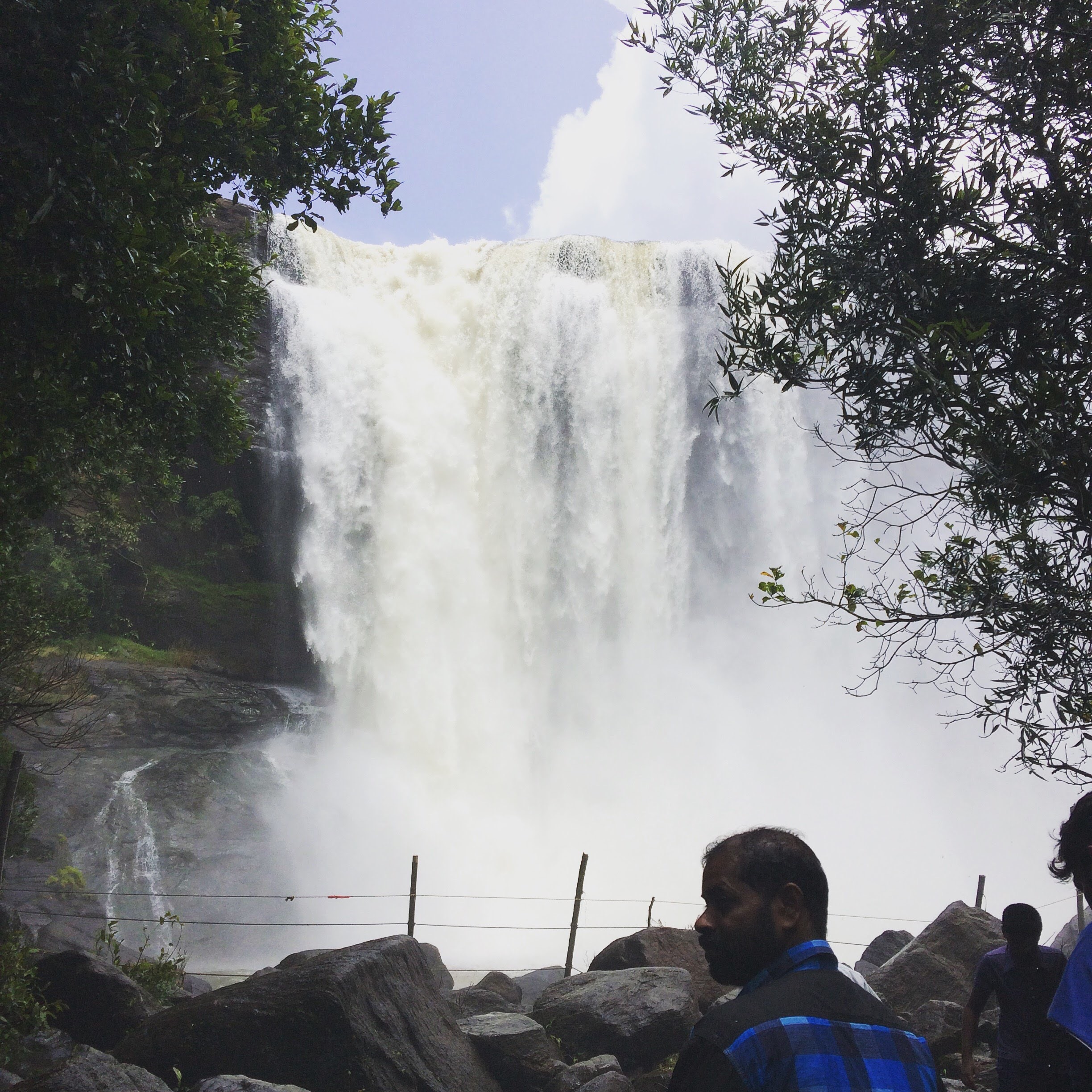
It was breathtaking. Rather, it was overwhelming. The water gushed forth with so much force that one would believe that the river in its entirety would fall over them. As we walked closer to it, I couldn’t just see it, I could feel it too.
The river pushed itself down a mountain, and as a gesture of welcome, sprayed its water on to the tourists. It welcomed me too. Droplets of water splashed on to my face and lashed on to my body. I clicked pictures to my heart’s content, and decided to leave the place.
Being the kind host it has always been, the river attempted to stop me by trapping my shoes in a muddy sludge. After a long rendezvous, I finally said goodbye and climbed uphill, only to face the mischievous monkeys again.
 Untamed Reflections
9 responses to “Water, water everywhere : Day 1”
Wowwww
LikeLike
I know right!
LikeLike
Beautiful.. Your day one has touched my heart and I can’t wait to see this place.. Lovely 👏👏👏👏👏👏
LikeLike
Thank you Rafia mumma!
LikeLike
Seems like a great adventure 😀 You have a great style of writing 👍
LikeLike
Thank you so much! I’m glad you liked reading it, means a lot to me!
LikeLiked by 1 person
Lovely! Waiting to read more!
LikeLike
Wwoooww! It’s lovely 💕💕💕the place and the read!🌸
LikeLike
Thank you!
LikeLike